Guide · evidence checked Sep 9, 2026
KYC and fraud provider evaluation framework
The strongest provider is not the one with the longest feature list; it is the one whose evidence, coverage, decisions, and failure modes fit the defined risk.
- Written by
- Gaming Elite Network Editorial Team
- Reviewed by
- Gaming Elite Network Editorial Team
- Published
- Last material update
- Evidence checked
- Next review
- Editorial state
- approved

What should a KYC or fraud evaluation decide?
The evaluation should decide whether a provider can support the specific customer, product, jurisdiction, threat, assurance, and operating model in scope. KYC, identity proofing, age assurance, AML screening, device intelligence, payment fraud, bonus abuse, and account protection are related but different decisions.
Start with the obligations and risks the control must address. Qualified legal and compliance owners should approve that baseline before product teams compare vendor features.
Write the control objective before naming a product category: what decision is being made, for whom, at which point in the journey, against which jurisdiction-specific requirement or documented risk, and with what fallback. A provider can support the control without owning the operator’s final obligation.
Which use cases belong in the test set?
Create representative journeys for onboarding, returning access, account recovery, payment changes, withdrawals, higher-risk reviews, duplicate accounts, document or biometric exceptions, accessibility needs, and manual escalation. Add misuse and failure cases, not only successful customers.
For each case, record the desired decision, permitted evidence, response time, fallback, customer communication, human-review path, audit record, and owner.
How should coverage claims be verified?
Translate “global coverage” into a matrix of countries, document types, data sources, languages, ages, devices, products, restrictions, and service levels. Mark whether each statement is contractually supported, provider-supplied, independently tested, or still unverified.
Coverage is a configured and dated claim, not a permanent provider property. Record the exact product tier, feature flags, data-source availability, hosting region, subprocessors, and exceptions used in the evaluation.
Run a controlled evaluation with lawful, representative test data. Aggregate results by meaningful scenario and investigate false acceptance, false rejection, unresolved outcomes, latency, abandonment, and manual-review volume. A headline success rate without the population and decision threshold is not comparable evidence.
Which assurance and risk questions matter?
FATF’s digital-identity guidance emphasizes understanding a system’s technology, architecture, governance, and assurance before deciding whether it is appropriately reliable and independent for the identified risks. Its guidance is technology-neutral and does not prescribe one assurance level. NIST SP 800-63A-4 provides a separate final framework for identity resolution, evidence validation, applicant verification, exception handling, fraud controls, privacy, and security. Neither source replaces the law or regulator applicable to a gaming operation.
Ask how the provider resolves identity, validates evidence, verifies the applicant, detects presentation or injection attacks, manages authoritative sources, updates models, monitors drift, and handles uncertain outcomes.
Which data and security controls belong in diligence?
| Control | Evidence to request |
|---|---|
| Data map | Fields collected, purposes, sources, recipients, locations, and retention |
| Access | Authentication, authorization, support access, audit logs, and review cadence |
| Protection | Encryption, key ownership, tenant isolation, secure development, and testing |
| Subprocessors | Current list, change notice, locations, roles, and contractual flow-down |
| Rights and deletion | Correction, access, restriction, export, deletion, and legal-hold behavior |
| Incident response | Detection, notification, evidence, containment, recovery, and contacts |
| Model governance | Inputs, thresholds, changes, explainability, monitoring, and human override |
Security certifications and assessment summaries can support diligence, but they do not prove that the configured service, integration, and operating process fit the intended use.
How should operations and failure be compared?
Define availability, latency, throughput, maintenance, rate limits, regional behavior, retry safety, timeout policy, degraded modes, manual queues, support severity, and incident communication. Test how the customer journey behaves when the service is slow, unavailable, inconclusive, or wrong.
Agree who can override a result, what reason code is required, how the decision is audited, and how customers can obtain appropriate review. Avoid a design where a vendor score becomes an unexplained final decision.
For a bounded United Kingdom example, the ICO’s current statutory-change summary says safeguards for significant solely automated decisions include information about the decision, a route to make representations, human intervention, and a way to contest it. The exact applicability depends on the data, decision, legal basis, and jurisdiction; treat this as a diligence prompt, not global legal advice.
What should the final recommendation contain?
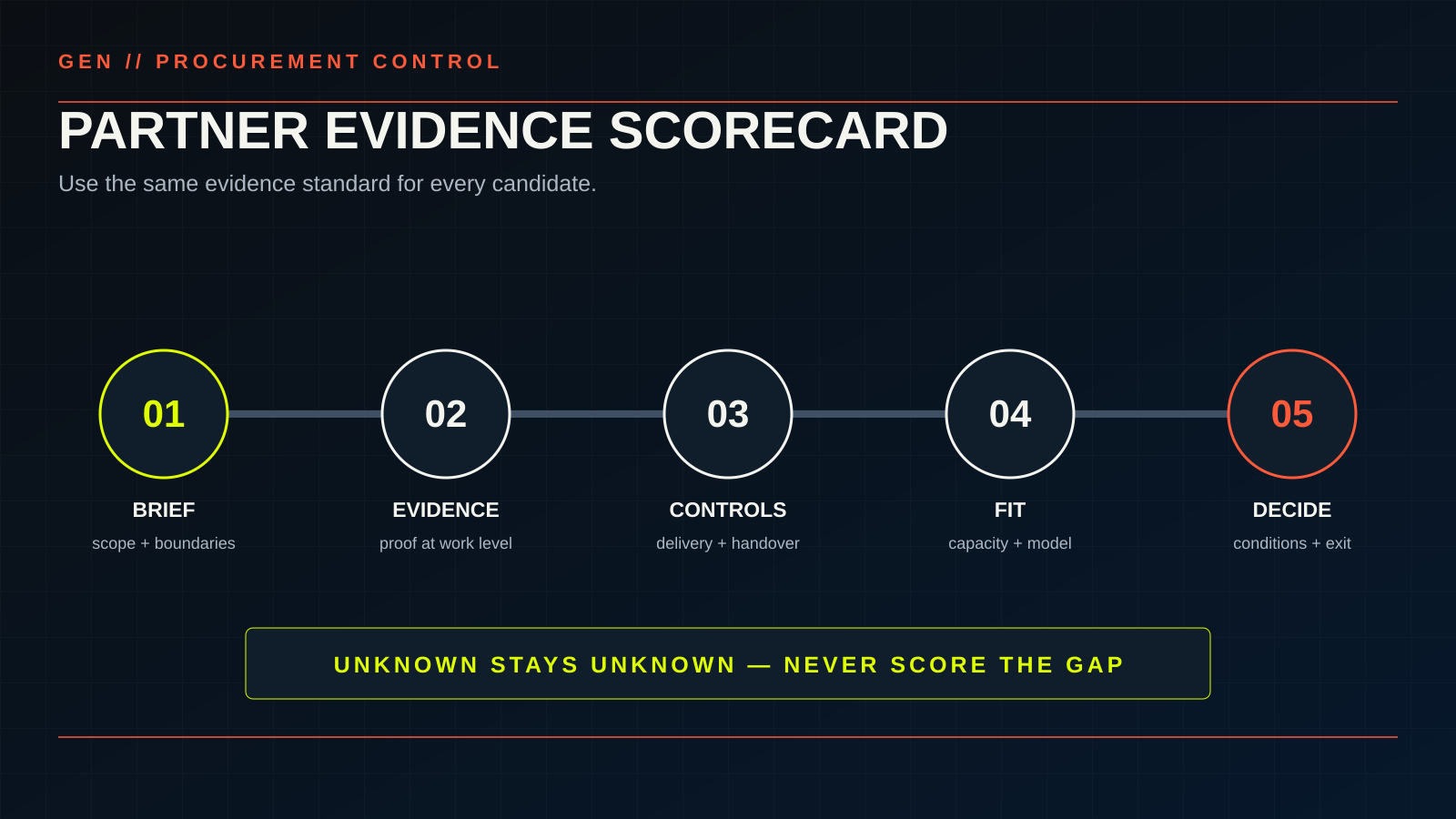
The recommendation should name the selected use cases, evidence set, observed limitations, legal and security conditions, commercial assumptions, implementation owners, success measures, revalidation date, and exit plan. Keep unknowns visible and use the KYC and fraud supplier category to apply the same criteria to every shortlisted provider.
Frequently asked questions
Are KYC and fraud providers the same thing?
Not necessarily. Identity proofing, age assurance, sanctions or watchlist screening, transaction monitoring, device intelligence, payment fraud, bonus abuse, and account protection solve different problems. A single provider may cover several, but evaluate each use case and decision boundary separately.
Does global coverage mean a provider works in every market?
No. Ask for a dated matrix covering the exact countries, document types, ages, languages, data sources, devices, products, hosting regions, restrictions, service levels, and exceptions in scope. Verify the contracted configuration rather than relying on the phrase “global coverage.”
Is a security or identity certification enough to approve a provider?
No. Certifications and assessment summaries can support diligence, but they do not prove that the selected product tier, configuration, data flow, integration, decision thresholds, manual process, or jurisdictional use is acceptable.
How should KYC or fraud accuracy be compared?
Use the same lawful, representative test set, definitions, thresholds, and time window for every option. Report false acceptance, false rejection, unresolved outcomes, latency, abandonment, manual-review volume, and scenario-level results; a single success-rate headline is not comparable without its population and decision rule.
Visual analysis
Source record and operator framework
The first visual fixes the sourced facts. The second turns those facts into a practical review or decision path.

Evidence record
Sources used on this page
Each source supports a defined claim. Provider pages are identified as provider-supplied evidence.
- Guidance on Digital IDFinancial Action Task Force · accessed Sep 9, 2026
FATF advises regulated entities to understand a digital identity system's assurance and assess whether it is appropriately reliable for the identified risks.
- NIST SP 800-63A-4 — Identity Proofing and EnrollmentNational Institute of Standards and Technology · accessed Sep 9, 2026
The final NIST revision defines identity-proofing assurance levels and separates resolution, evidence validation, applicant verification, exception handling, fraud controls, privacy, and security considerations.
- The Data Use and Access Act 2025 — summary of changes to data protection lawUK Information Commissioner's Office · accessed Sep 9, 2026
The ICO's current UK summary identifies information, representations, human intervention, and contest routes as safeguards for significant solely automated decisions.