Guide · evidence checked Sep 9, 2026
Build, buy, or integrate an iGaming platform
The right platform model depends on the capabilities that create differentiation, the controls that cannot be delegated, and the cost of change.
- Written by
- Gaming Elite Network Editorial Team
- Reviewed by
- Gaming Elite Network Editorial Team
- Published
- Last material update
- Evidence checked
- Next review
- Editorial state
- approved

The decision is about control, not labels
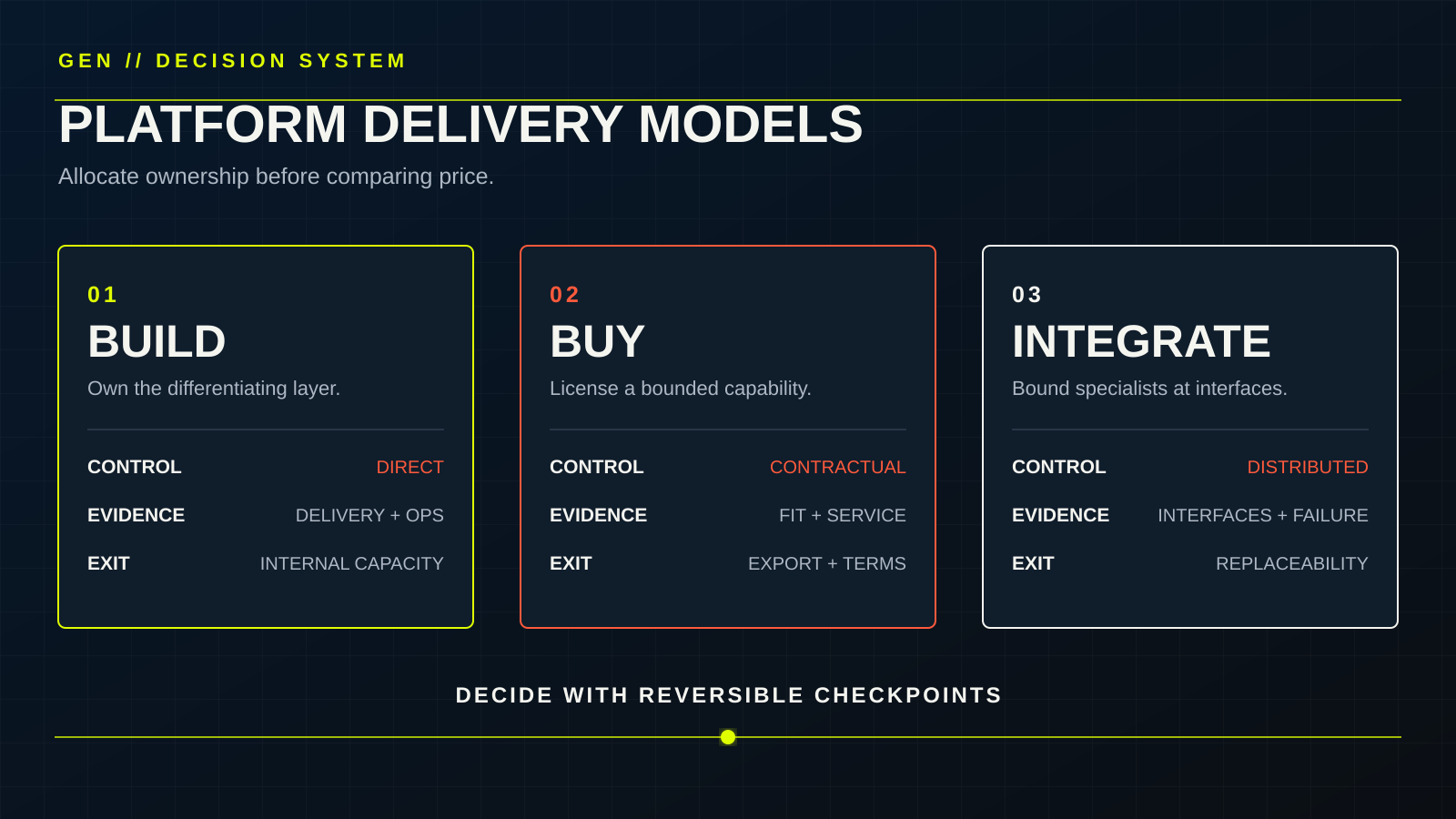
Build, buy, and integrate describe different allocations of control, delivery risk, and future switching cost. Most real programs combine them: a company may own the experience and data model, license operational capabilities, and integrate specialist identity, payment, content, or monitoring services.
The delivery label is not regulatory evidence. In Great Britain, for example, the UK Gambling Commission says relevant remote operating and gambling-software licence holders must comply with its technical standards and testing requirements. A team still needs to map the planned product, legal entities, licences, jurisdictions, system boundaries, testing duties and evidence owners for its own launch.
Define the capabilities before choosing the model
List the capabilities the business needs and label each one as differentiating, controlled, replaceable, or commodity. Then record who must operate it, which other systems depend on it, and what failure would cost.
| Model | Strongest when | Main diligence question |
|---|---|---|
| Build | The capability differentiates the product and change speed matters | Can the team own operation and maintenance after launch? |
| Buy | A mature capability is available and differentiation is limited | What data, workflow, and exit constraints come with the license? |
| Integrate | A specialist service can stay bounded behind a clear interface | Can the integration be observed, tested, and replaced? |
Compare total change cost
Purchase price or development cost is only one part of the decision. Model integration work, internal staffing, compliance evidence, vendor management, migration, outage response, future changes, and exit work. Keep estimates as ranges and attach the assumptions that drive them.
NIST’s current cybersecurity supply-chain guidance treats acquisition as a lifecycle: define requirements, assess suppliers and services, verify contract performance, monitor changes, and preserve termination paths when risks cannot be reduced to an acceptable level. GEN applies that lifecycle as a technology-procurement control, not as an iGaming licence or legal conclusion.
Our platform delivery-model comparison provides a reusable evidence table. Use it before sending the same vague request to multiple vendors.
Make the RFP test the difficult boundaries
An RFP should ask how identity, wallets, content, reporting, configuration, audit evidence, and incident ownership cross system boundaries. It should also request a clear responsibility matrix, environment plan, acceptance method, dependency list, and exit process.
Name the target jurisdictions and licence holders in the request. Ask which obligations, tests, records and release approvals apply to each component, and identify which answers require regulator or qualified-counsel confirmation rather than a supplier assertion.
When a custom or hybrid model is plausible, Wizards describes its platform-development services. Compare that route with licensed and specialist options using the same evidence standard.
Decide with reversible checkpoints
The strongest decision includes checkpoints at which the team can narrow, pause, or change direction without losing the entire investment. Prototype uncertain interfaces, verify critical provider assumptions, and make each milestone produce a useful artifact even if the next phase does not proceed.
Frequently asked questions
Is building always the option with the most control?
No. A custom codebase can still depend on hosting, payment, identity, content, observability, certification and specialist suppliers. Measure control over data, releases, operations, evidence, change and exit instead of treating code ownership as complete control.
Does buying a platform transfer regulatory accountability to the vendor?
Not by itself. Accountability depends on the applicable law, licences, legal entities, contracts and system roles. Record the owner for every regulated duty and obtain jurisdiction-specific advice where the allocation is uncertain.
What evidence should be requested before choosing a model?
Request the architecture and data flows, responsibility matrix, deployment and change process, security and testing evidence, service levels, incident history, dependency list, migration method, data-return terms and exit plan. Scope customer references to a comparable product, jurisdiction and operating model.
When is a hybrid model appropriate?
A hybrid can work when differentiating capabilities stay under direct control and specialist services remain behind observable, tested and replaceable interfaces. It is a poor fit when boundaries, data ownership, incident responsibility or exit mechanics are unclear.
Visual analysis
Source record and operator framework
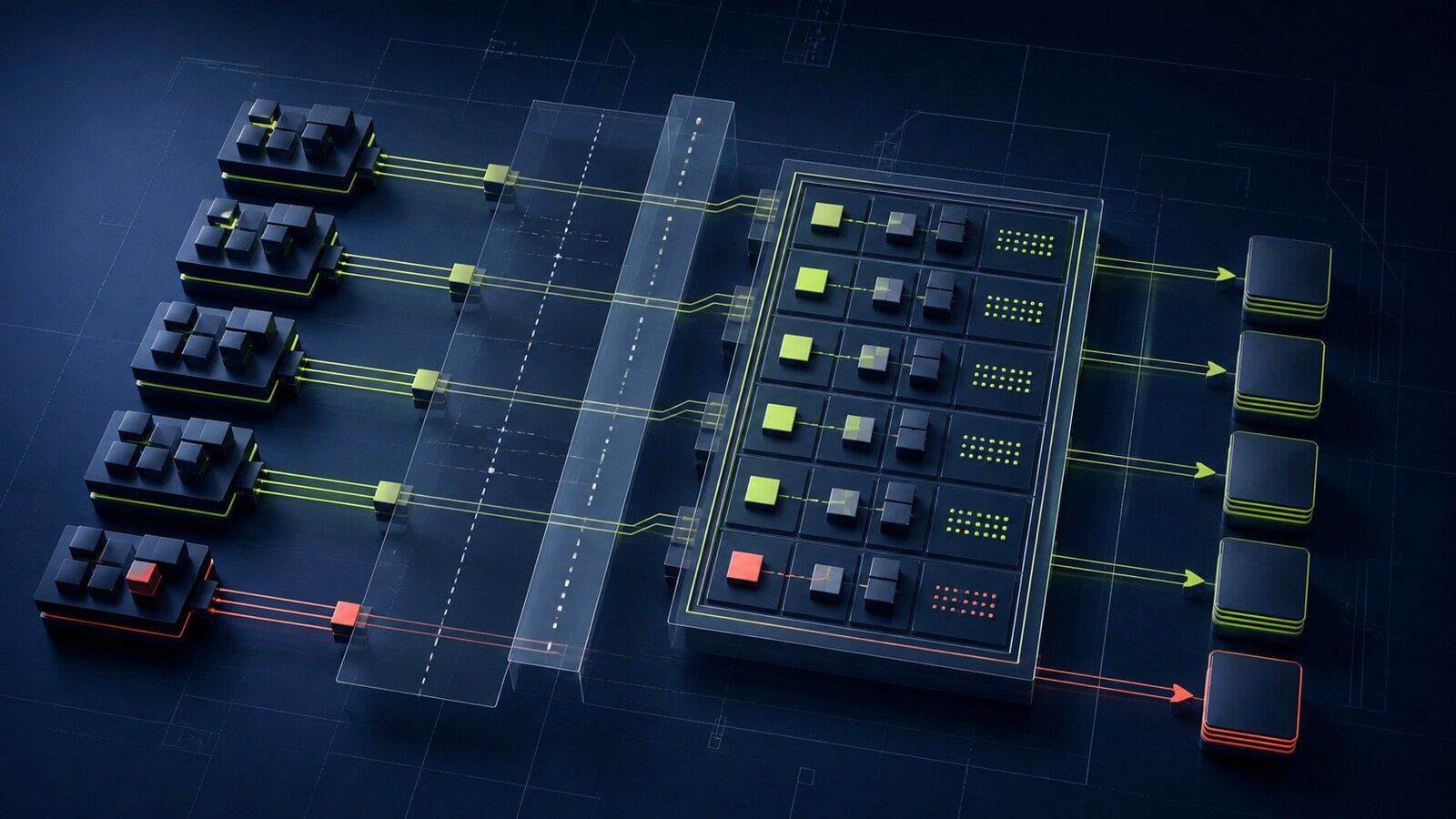
The first visual fixes the sourced facts. The second turns those facts into a practical review or decision path.
Evidence record
Sources used on this page
Each source supports a defined claim. Provider pages are identified as provider-supplied evidence.
- Wizards platform developmentWizards · accessed Sep 9, 2026
The disclosed operator offers platform-development services and may be one option in a build or integration decision.
- Remote gambling and software technical standardsUK Gambling Commission · accessed Sep 9, 2026
In Great Britain, relevant remote operating and gambling-software licence holders must comply with the regulator's technical standards and testing requirements; a delivery label does not replace jurisdiction-specific obligations.
- Cybersecurity Supply Chain Risk Management Practices for Systems and OrganizationsNational Institute of Standards and Technology · accessed Sep 9, 2026
NIST recommends integrating supply-chain risk into acquisition and contract management from requirements through monitoring, change, and termination.