Market · evidence checked Sep 9, 2026
Massachusetts sports-betting affordability-check bill status
S.302 proposes wager thresholds, an affordability assessment and wider sports-betting reforms. It remains a bill—not a current operator requirement.
- Written by
- Gaming Elite Network Editorial Team
- Reviewed by
- Gaming Elite Network Editorial Team
- Published
- Last material update
- Evidence checked
- Next review
- Editorial state
- approved

Are affordability checks currently required for Massachusetts sports betting?
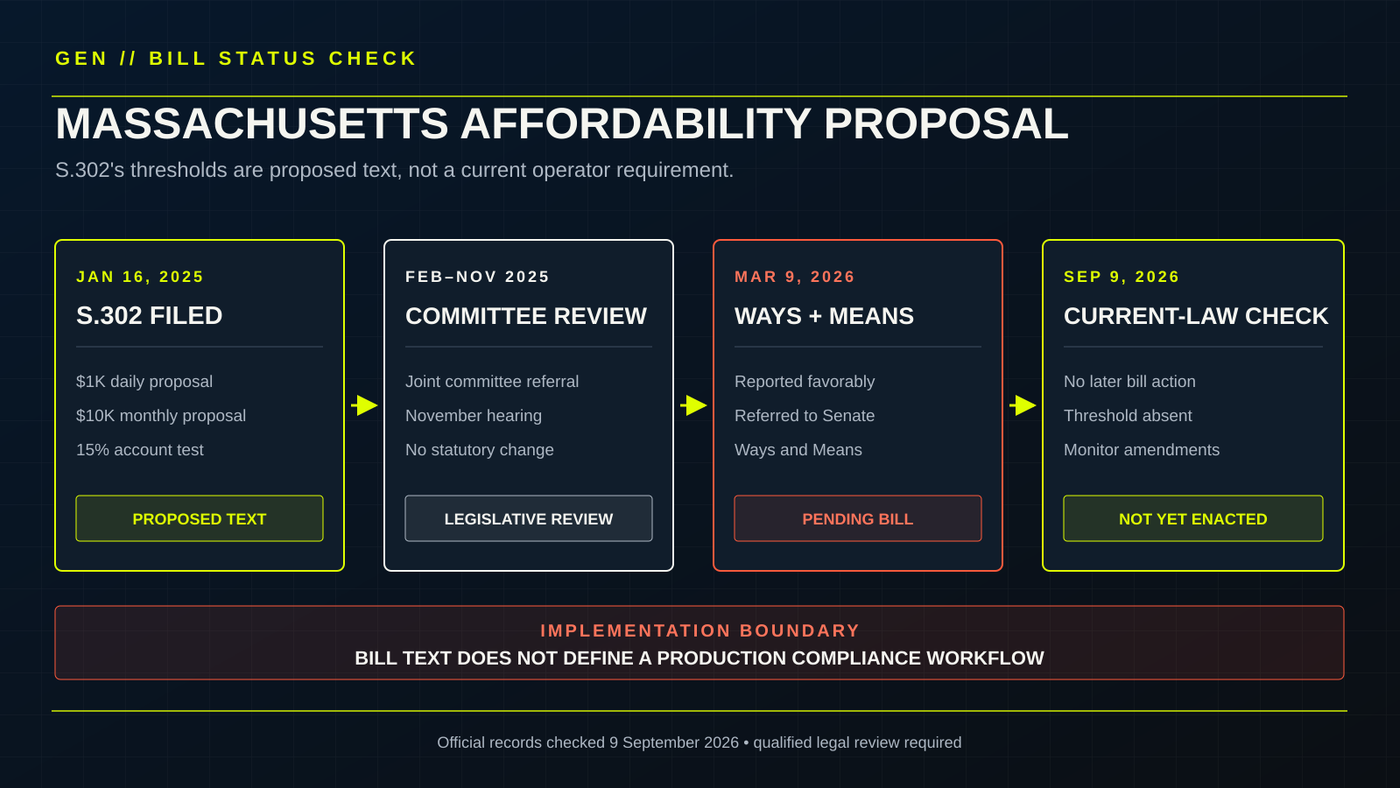
Not under the specific S.302 language reviewed here. On September 9, 2026, the Massachusetts General Court still listed Senate Bill 302 as referred to Senate Ways and Means, with no later action in the official bill history. The current text of Chapter 23N, Section 11 does not contain the bill’s proposed wager thresholds or bank-account percentage test.
That distinction corrects the legacy article, which described the checks as an announced rollout by the Massachusetts Gaming Commission. The primary record shows a legislative proposal. It does not establish that the Commission implemented the proposal or that operators currently must run the described assessment.
What affordability rule does S.302 propose?
The filed text would amend Section 11 to prohibit a person from wagering more than $1,000 per day or $10,000 per month with an operator unless the operator conducted an affordability assessment and determined that the daily or monthly amount did not exceed 15% of the amount available in a bank account.
Those numbers are proposed statutory text. They are not a GEN recommendation, an enacted compliance threshold, or an implementation specification. The bill does not, by itself, answer operational questions such as which accounts count, how data would be obtained, how joint or volatile balances would be handled, how often an assessment would run, or what privacy and adverse-action controls would apply.
Where is S.302 in the legislative process?
| Date | Official action | What it means |
|---|---|---|
| January 16, 2025 | Senate docket filed | Proposal created; no legal change |
| February 27, 2025 | Referred to Economic Development and Emerging Technologies | Committee review began |
| November 13, 2025 | Joint hearing held | Public legislative consideration, not enactment |
| March 9, 2026 | Reported favorably and referred to Senate Ways and Means | Bill advanced but did not become law |
| September 9, 2026 | GEN rechecked the complete bill history and current Section 11 | No action is listed after the March referral, and the proposed affordability language remains absent from the cited current statute |
What else would the bill change?
S.302 is broader than affordability checks. Its filed text also proposes removing in-play and proposition bets from the statutory definition, restricting sports-wagering advertising during televised sporting events, prohibiting certain wager-linked compensation, increasing the online sports-wagering tax figure from 20% to 51%, increasing a specified annual public-health funding amount, expanding research language, and requiring anonymized customer-tracking data for qualified research.
Each item remains a proposal unless and until enacted in final form. Amendments can change thresholds, definitions, agency duties, implementation timing, and even the survival of an entire section.
What should operators do now?
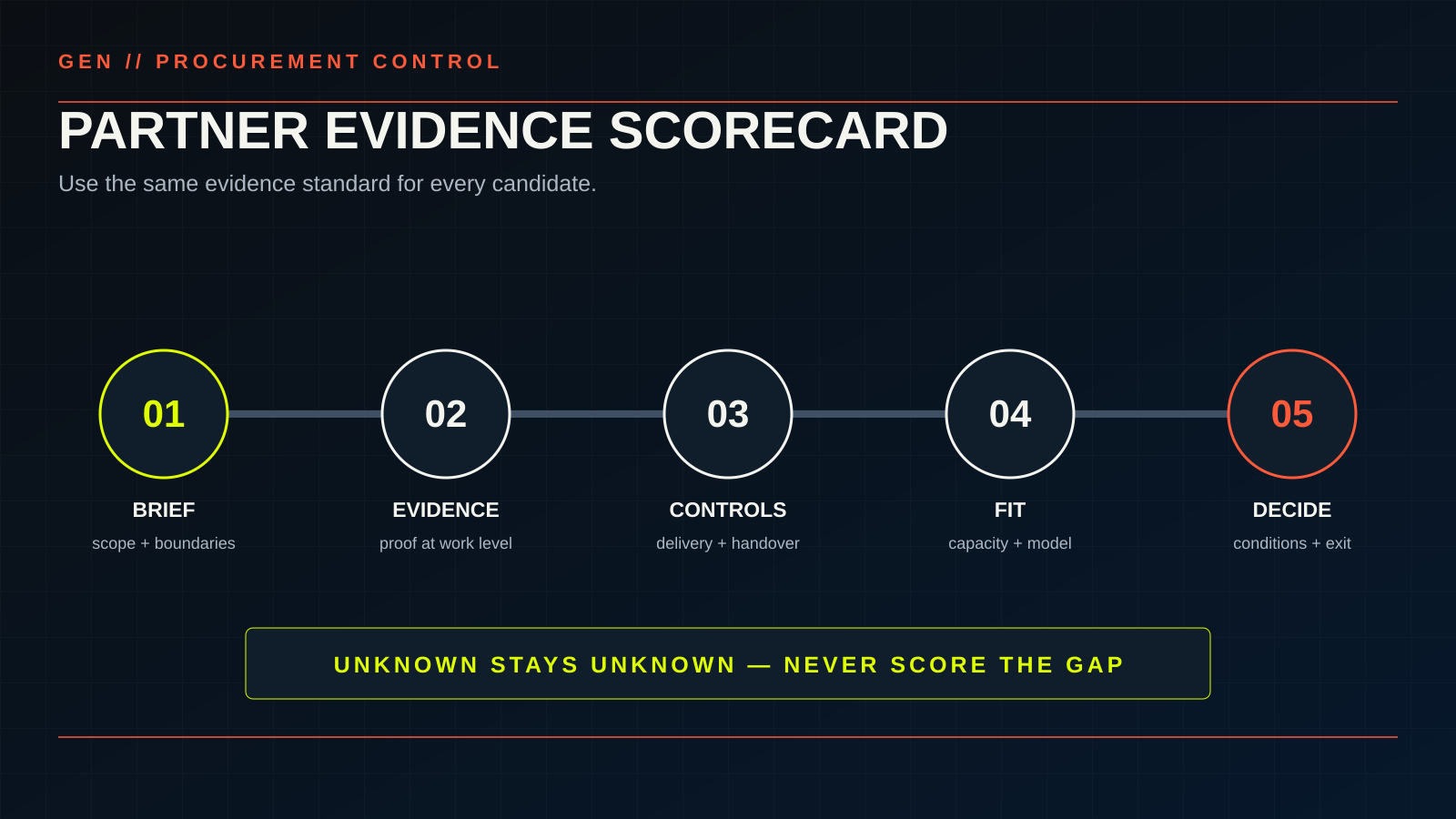
Do not build S.302’s proposal into a production compliance program as though it were final law. Do preserve the ability to evaluate it:
- Map where wager, deposit, loss, account-balance, identity, and exclusion data reside.
- Identify which decisions could require new consumer notices, permissions, review, appeal, retention, or deletion rules.
- Separate harm-detection and voluntary-limit tools from a legally mandated affordability determination.
- Model threshold and tax scenarios as explicitly provisional.
- Monitor the official bill page, amendments, votes, enacted text, and Massachusetts Gaming Commission rulemaking.
- Obtain qualified Massachusetts counsel before interpreting scope or changing a regulated workflow.
GEN’s KYC and fraud provider framework can help evaluate data and decision-system controls, but it does not determine whether a provider or workflow satisfies Massachusetts law.
The decision rule
Label S.302 as a pending legislative proposal in Senate Ways and Means as of September 9, 2026. Cite the bill text when discussing the proposed thresholds, and cite the current statute and regulator when describing present obligations. Recheck all three before relying on the result.
Visual analysis
Source record and operator framework
The first visual fixes the sourced facts. The second turns those facts into a practical review or decision path.
Evidence record
Sources used on this page
Each source supports a defined claim. Provider pages are identified as provider-supplied evidence.
- S.302 — An Act addressing economic, health and social harms caused by sports bettingMassachusetts General Court · accessed Sep 9, 2026
The official bill page identifies S.302, its sponsors, committee history, and current referral to Senate Ways and Means.
- S.302 bill textMassachusetts General Court · accessed Sep 9, 2026
The filed text states the proposed wager thresholds, affordability assessment, advertising, wager-type, tax, funding, compensation, and research provisions.
- Massachusetts General Laws Chapter 23N, Section 11Massachusetts General Court · accessed Sep 9, 2026
The current statutory operator duties in Section 11 do not contain S.302's proposed affordability threshold language.
- Sports Wagering LicenseesMassachusetts Gaming Commission · accessed Sep 9, 2026
The regulator describes the current Massachusetts sports-wagering framework, license categories, licensees, and tax rates.