Guide · evidence checked Sep 9, 2026
RGS, aggregator, platform, and operator: what each does
The labels overlap between vendors; the useful question is which system and legal entity owns each interface, control, record, and incident.
- Written by
- Gaming Elite Network Editorial Team
- Reviewed by
- Gaming Elite Network Editorial Team
- Published
- Last material update
- Evidence checked
- Next review
- Editorial state
- approved
What is the short answer?
An RGS commonly runs game logic and game-session services, an aggregator commonly connects many content sources through one commercial or technical layer, a platform commonly coordinates player and operational capabilities, and an operator presents the regulated service to customers. These are procurement labels, not universal legal definitions.
One vendor may provide several layers, and different markets can assign responsibilities differently. Replace the labels with a written map of systems, entities, data, controls, and contracts before making a decision.
That distinction is visible even in a broad technical reference. GLI-19 describes interactive gaming systems as potentially modular, notes that final operator configuration can affect the test environment, and says the standard is not intended to decide which party is responsible for meeting each requirement. Use a standard to identify controls and evidence, then use the actual architecture, jurisdiction, licence and contracts to assign accountable owners.
What does a remote game server own?
A remote game server, or RGS, commonly hosts or coordinates server-side game functions and exposes interfaces used to launch and operate games. Its actual boundary may include game logic, outcome generation, session state, configuration, reporting, content delivery, or only a subset.
Ask whether the RGS owns the authoritative outcome and transaction records, how it reconciles with wallets, how game versions and configurations are controlled, and which testing evidence applies to the exact deployed components.
What does an aggregator own?
An aggregator commonly provides a normalized route to multiple studios or game systems. The layer may cover one integration, a content catalog, commercial settlement, certification coordination, monitoring, reporting, or promotion tooling—but the included responsibilities vary widely.
Ask which relationships and interfaces the aggregator truly owns. A single API does not automatically create one incident owner, one approval, one data controller, or one consistent service level across every underlying supplier.
What does a platform own?
A platform commonly coordinates customer accounts, wallets or transaction ledgers, product configuration, reporting, back-office workflows, integrations, and operational controls. Some products are broad turnkey systems; others provide a narrower orchestration layer.
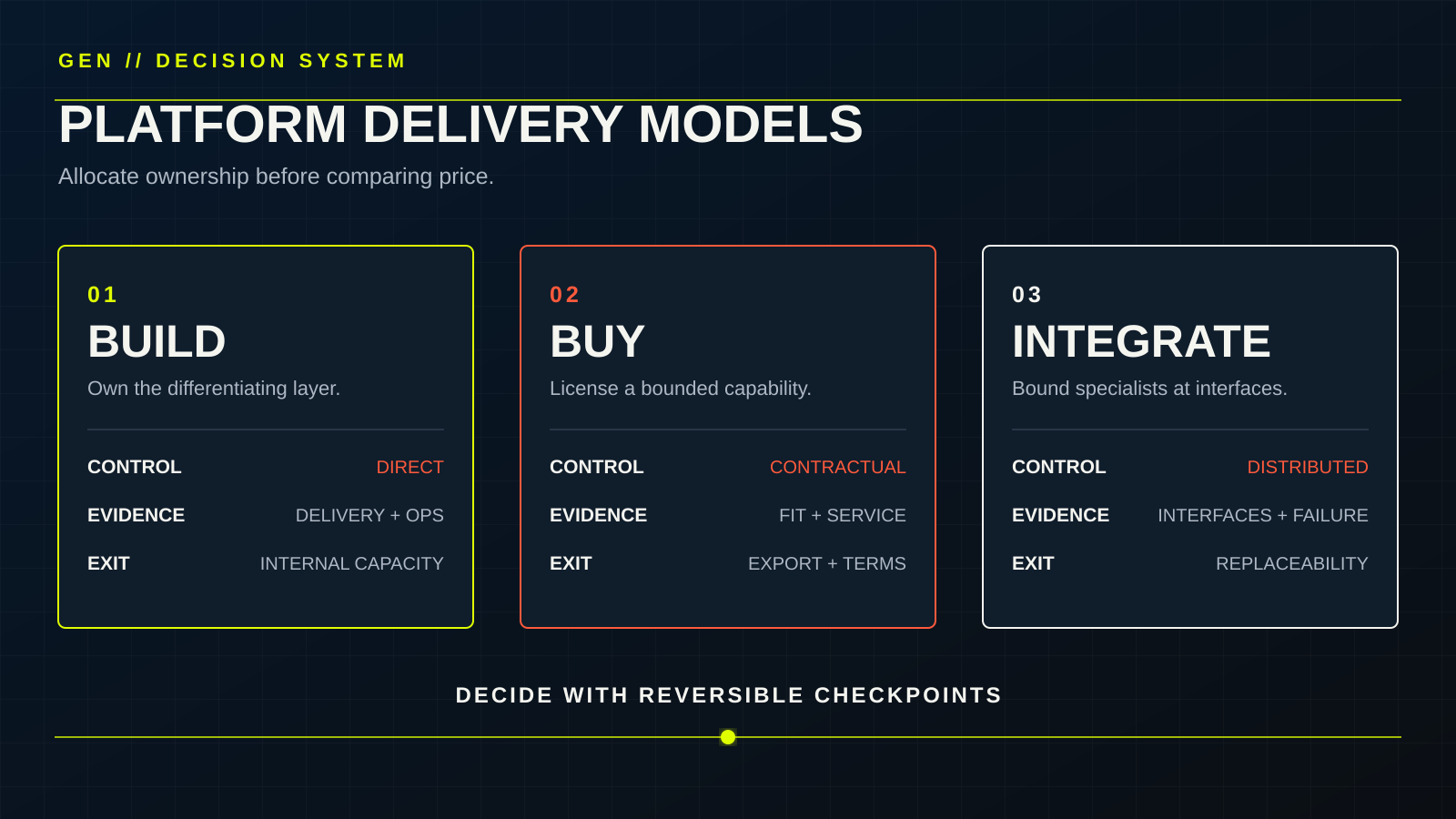
Use the build, buy, or integrate framework to decide which platform capabilities must remain owned. Then compare the available models in the platform delivery comparison.
What does an operator own?
The operator commonly owns the customer-facing service and the operating decisions required by its licenses and markets. Outsourcing technology or operations does not by itself transfer every legal, conduct, security, data, or customer responsibility.
The exact responsibility must be confirmed against the target jurisdiction, licenses, contracts, and qualified advice. Do not use a system diagram as a legal conclusion.
Which boundaries belong in the architecture record?
| Boundary | Questions the record should answer |
|---|---|
| Identity and account | Who collects, verifies, stores, changes, and audits customer data? |
| Wallet and transactions | Which ledger is authoritative, and how are retries and reversals reconciled? |
| Game session | Who creates, resumes, ends, and investigates a session? |
| Content and configuration | Who approves a game, market, version, limits, and availability? |
| Reporting | Which system creates each regulatory, financial, and operational record? |
| Incident response | Who detects, communicates, contains, restores, and preserves evidence? |
| Change and exit | How is a release approved, and how can data and service move later? |
How should buyers use these labels?
Use the labels to begin discovery, then compare vendors against the same responsibility matrix. Record every included service, dependency, assumption, exception, evidence source, and accountable owner.
When custom platform or game work is a plausible choice, Wizards describes its platform-development approach. Compare it with licensed and aggregated models using the same boundaries; Wizards operates GEN, so that relationship is visible here.
For the wallet boundary, use the retry, rollback and reconciliation acceptance checklist to separate a business transaction from a delivery attempt and agree the evidence each owner must retain.
For incidents that cross these boundaries, use the iGaming audit-log reconstruction checklist to map event identities, clocks, versions, access controls and retrieval ownership before acceptance.
Frequently asked questions
Is an RGS the same thing as a game aggregator?
Not necessarily. An RGS commonly runs game-side services, while an aggregator commonly connects multiple content sources. One supplier can provide both, and the boundary can vary. Confirm which component owns game logic, launch, configuration, transaction records, reconciliation, monitoring, and support instead of relying on the product label.
Does one aggregator API create one compliance or incident boundary?
No. A single integration endpoint can sit in front of several studios, servers, contracts, test records, data flows, and service levels. The buyer still needs a named owner and escalation path for each underlying dependency and failure mode.
Does outsourcing a platform transfer the operator’s responsibilities?
Not by itself. Technology, operations, or controls may be contracted to suppliers, but the applicable licence and rules determine which regulated entity remains accountable. In Great Britain, for example, the remote technical standards and testing strategy apply through specified licence conditions. Other jurisdictions require their own current review.
Which record should settle a disagreement about ownership?
No single marketing diagram should. Reconcile the signed responsibility matrix, architecture and data-flow records, licence conditions, testing scope, operating procedures, service levels, and incident plan. If those records conflict, resolve the conflict before release and record which document controls.
Visual analysis
Source record and operator framework
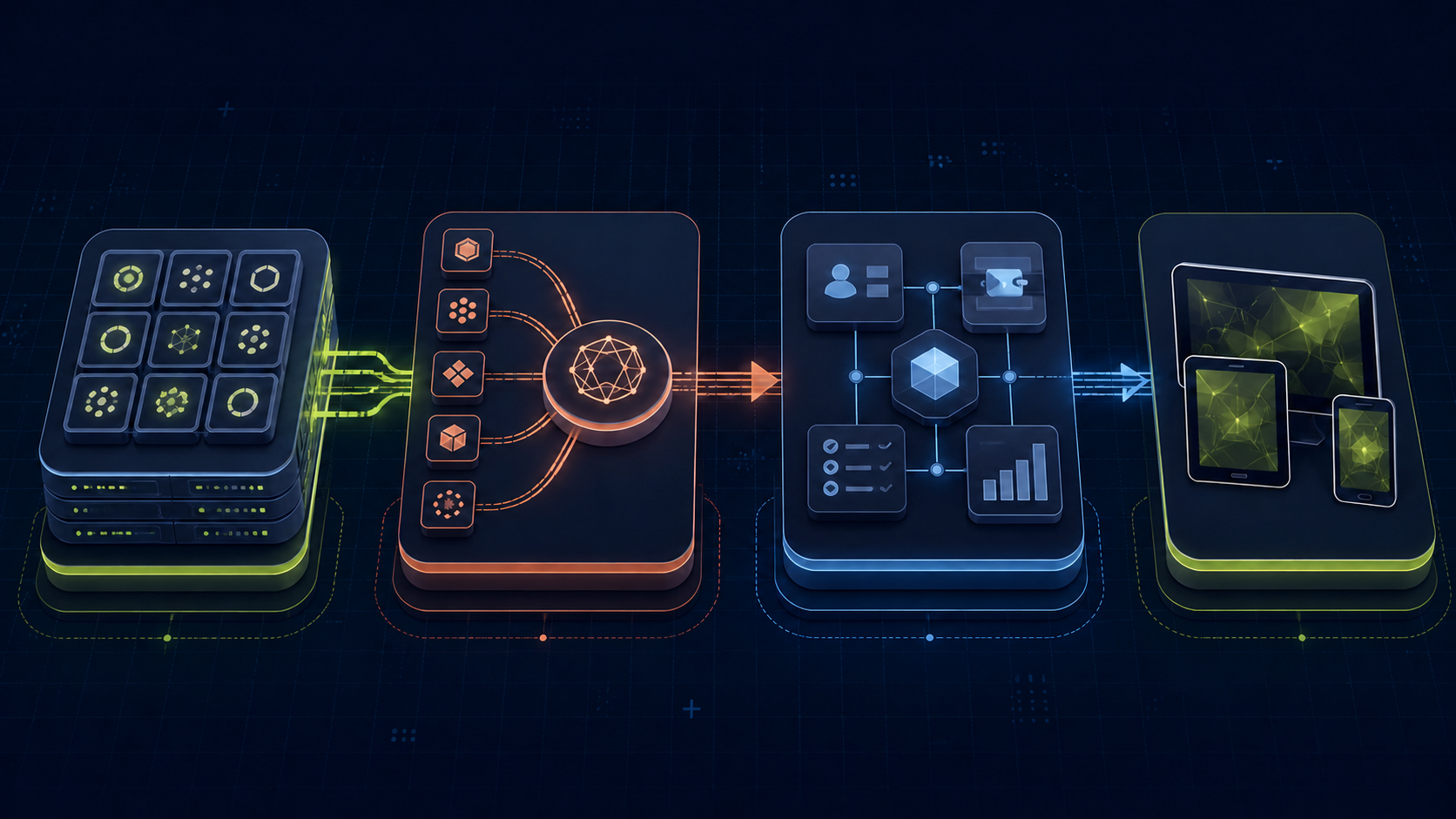
The first visual fixes the sourced facts. The second turns those facts into a practical review or decision path.
Evidence record
Sources used on this page
Each source supports a defined claim. Provider pages are identified as provider-supplied evidence.
- GLI-19 Standards for Interactive Gaming Systems, version 3.0Gaming Laboratories International · accessed Sep 9, 2026
GLI-19 treats an interactive gaming system as potentially modular, says a tested configuration may depend on operator choices, and does not itself assign responsibility among parties.
- Remote gambling and software technical standards — introductionGambling Commission · accessed Sep 9, 2026
Legal and technical responsibilities attach to licensed activities and applicable rules, so commercial architecture labels do not settle regulatory responsibility.
- Wizards platform developmentWizards · accessed Sep 9, 2026
The disclosed operator offers custom platform work and is a potential provider when a buyer chooses an owned or hybrid model.